
Your cart is empty
Looks like you haven't made your choice yet
|
In a world of heightened visual demands, the eyes and brain are required to continuously process a vast amount of information. Today, consumers are exposed to unprecedented levels of visual and cognitive strain. Innumerable visual stimuli add extra burden to the eyes while simultaneously increasing cognitive load. Difficulty maintaining concentration has become a common complaint across all age groups. When an image is not perfectly clear, the brain puts in extra effort to interpret it, thereby elevating cognitive load and visual fatigue. Cognitive load reflects the “work” the brain performs to make sense of what we see. |
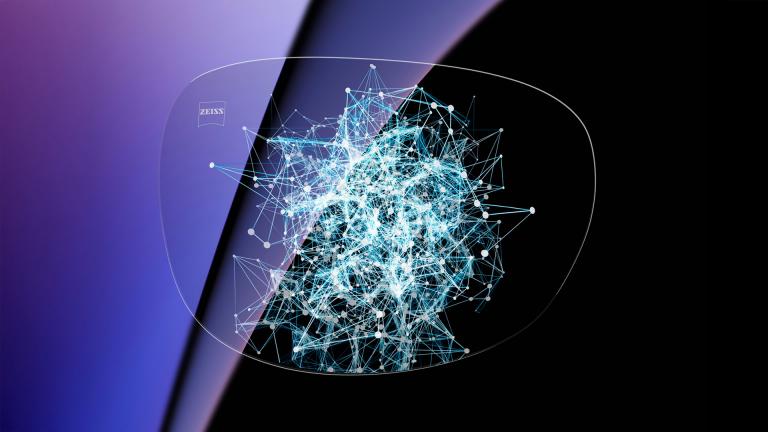 ZEISS ClearMind lenses with NeurOptix technology were designed based on this insight. They align clarity zones with natural eye movement and manage blur where it impacts vision most, offering clearer and more comfortable vision in daily life. Essentially, they reduce visual fatigue and cognitive load, making vision more relaxing and focus easier throughout the day.
Reduced peripheral blur: Minimizes unwanted distortion along the edges of the lens.
Expanded zones of clear vision: Delivers wider, uninterrupted fields of view.
Optimized intermediate zone: Enhances visual clarity for arm’s-length tasks like computer work.
Smoother transitions: Ensures seamless progression between distance, intermediate, and near vision
96% of users report exceptionally clear vision.
85% of users report a positive impact on their daily comfort (improved overall well-being). 2
76% of users state that the lenses increased their ability to focus on an activity. 2
69% of users state that their eyes feel refreshed throughout the day.
Study results demonstrate that ZEISS ClearMind lenses can contribute to tear film stability by maintaining a normal blink rate. A stable tear film is directly linked to lower levels of eye fatigue 3. On average, the blink rate is 16% higher with ZEISS Progressive ClearMind lenses compared to standard ZEISS progressive lenses. 4
If you would like to learn more about all available ophthalmic lens categories, book an appointment for a free consultation here
| Βιβλιογραφία: 1. NASA-TLX assessment of perceived cognitive load. Performance test on ZEISS ClearMind progressive lenses compared to standard ZEISS progressive lenses, N=32. ZEISS Vision Science Lab, Institute for Ophthalmic Research, University of Tübingen, DE 2025. 2. Opinion-based survey among wearers of ZEISS ClearMind lenses in Germany, Italy, India & China (N=298, Single Vision, Digital & Progressive lenses), 2025, Carl Zeiss Vision International GmbH, DE (unpublished, data on file, Top2boxes) 3. Watanabe, M., Hirota, M., Takigawa, R., Kato, K., & Ikeda, Y. (2025). Objective Evaluation of Relationship Between Tear Film Stability and Visual Fatigue. Clinical Optometry, 175-183 4. ZEISS Visual Perception Study. 2025. Data on file |
